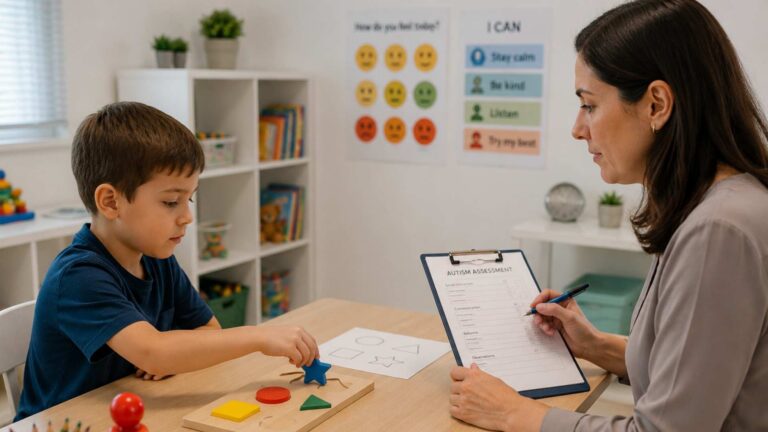

What Is ABA Therapy for Toddlers and Why Does It Look Different at This Age?
To understand what ABA therapy for toddlers is, it helps to remember how toddlers learn. Young children do not usually learn best through lectures, worksheets, or long periods of sitting still. They learn by reaching, pointing, imitating, exploring toys, asking for help, reacting to sounds, moving through routines, and trying again with support.
ABA, or Applied Behavior Analysis, uses the science of learning and behavior to understand what helps a child gain new skills. In practice, ABA therapy for toddlers focuses on small, meaningful goals that can improve daily life.
ABA therapy for toddlers often uses play-based strategies to teach new skills in ways that feel natural and engaging for young children. A toddler may work on asking for a favorite snack, responding to their name, tolerating transitions, playing near another child, washing their hands, or using gestures, pictures, sounds, or words to communicate.
When families ask: “What is ABA therapy for toddlers?”, they are often asking whether therapy will feel too intense for a young child. A thoughtful program should be developmentally appropriate. That means the therapist meets the child where they are, uses motivation carefully, follows the child’s interests, and builds skills step by step.
For a toddler in Marietta who loves cars, a therapist may use toy cars to practice turn-taking. For a child in Buckhead who enjoys bubbles, the therapist may pause before blowing more bubbles to encourage requesting. For a child in Alpharetta who struggles with getting dressed, therapy may include practicing that routine in small, supported steps.

How ABA Therapy for Toddlers Supports Real-Life Skills
ABA therapy for toddlers is not only about reducing challenging behaviors. It is also about helping a child develop skills that make the world easier to navigate.
For many families in Atlanta and surrounding Georgia communities, the most urgent concerns are practical: “How can my child tell me what they need?” “How can we get through meals without so much distress?” “How can daycare or preschool feel less overwhelming?” “How can we help our toddler play, connect, and participate?”
ABA therapy for toddlers may support:
- Functional communication, such as pointing, signing, using pictures, using a communication device, making sounds, or saying words
- Early play skills, such as stacking blocks, taking turns, imitating actions, or playing with toys in new ways
- Social readiness, such as noticing others, sharing attention, waiting briefly, or participating in simple group routines
- Daily living skills, such as handwashing, dressing, brushing teeth, cleaning up toys, or sitting for meals
- Emotional regulation, such as learning safer ways to ask for a break, accept “not yet,” or move through transitions
Research continues to support early behavioral intervention as one evidence-based option for young children with autism. A Cochrane review notes that Early Intensive Behavioral Intervention has been studied for improving functional behaviors, skills, intelligence, and communication in young children with autism. A review in Cureus also examined early intensive behavioral and developmental interventions in children under 7, reporting findings on cognitive, language, and adaptive outcomes.
This does not mean every toddler needs the same plan or the same intensity. It means early support can be meaningful when it is individualized, clinically guided, and responsive to the child’s needs.
At-Home ABA Therapy for Toddlers: Learning Where Life Happens

For many Georgia families, at-home ABA therapy for toddlers is especially helpful because toddlers are still learning many skills within everyday family routines. Home is where they eat, play, get dressed, transition between activities, ask for comfort, and practice independence.
At-home ABA therapy for toddlers allows the clinical team to observe what is actually happening in the child’s natural environment. A BCBA may notice that a child communicates more during snack time than during structured play, or that transitions become harder when a favorite toy disappears without warning. These details matter because they help shape a plan that fits the child’s real life.
At-home ABA therapy for toddlers may include practicing:
- Asking for help during play
- Using a visual support before leaving the house
- Tolerating toothbrushing in short steps
- Sitting at the table for a few minutes during meals
- Cleaning up one toy before starting another activity
- Transitioning from screen time to bath time
- Responding to a parent’s direction in a familiar room
For families in Atlanta, Buckhead, Alpharetta, and Marietta, at-home ABA therapy for toddlers can also help parents feel more confident using the same strategies between sessions. Parents are not expected to become therapists. But with coaching, they can learn simple ways to support communication, reinforce progress, and reduce frustration during daily routines.
What Is ABA Therapy for Toddlers During a Typical Session?
Another way to answer what is ABA therapy for toddlers is to look at what a session may actually feel like.
A toddler’s ABA session might begin with pairing, which means the therapist spends time building trust and connection. Before asking a child to practice harder skills, the therapist learns what the child enjoys. That may include songs, sensory toys, pretend play, puzzles, movement games, books, or outdoor play.
From there, the therapist works on the goals outlined in the child’s treatment plan. These goals are written and supervised by a Board Certified Behavior Analyst, or BCBA. Sessions may include a combination of natural teaching and more structured practice, depending on the child’s needs.
For example, a therapist may:

When parents ask, “What is ABA therapy for toddlers?” this is often the most reassuring answer: it should look purposeful, but it should still respect how young children learn. A skilled provider understands that a toddler’s attention span, sensory needs, communication level, and emotional readiness all shape the session.
Why Early Support Matters for Georgia Toddlers with Autism
Early childhood is a period of rapid growth. Toddlers are developing language, attention, imitation, play, motor skills, and social awareness simultaneously. When autism affects these areas, early support may help children build foundational skills before later school and community expectations become more complex.
Research by Child and Adolescent Psychiatry and Mental Health revealed significant improvements across adaptive behavior, daily living skills, language skills, and joint attention. Notably, high-intensity interventions demonstrated a substantially stronger impact on language acquisition than lower-intensity interventions.
For families in Georgia, this can matter in very practical ways. A toddler who learns to request a break may have fewer distressing meltdowns. A child who learns to imitate may have more opportunities to build language. A child who can participate in simple routines may find it easier to enter preschool, daycare, or community activities.
ABA therapy for toddlers is not about changing who a child is. It is about helping them communicate, participate, and feel more understood.
At-Home ABA Therapy for Toddlers and Parent Involvement
At-home ABA therapy for toddlers works best when families are included in a respectful, realistic way. Parent involvement does not mean adding pressure to an already full day. It means helping parents understand what the therapy team is teaching and how to use small, consistent strategies during routines that are already happening.
For example, a parent may learn how to wait a few seconds before helping, so the child has a chance to communicate. They may learn how to offer simple choices, use clear language, reinforce a new skill, or prepare the child before a transition.
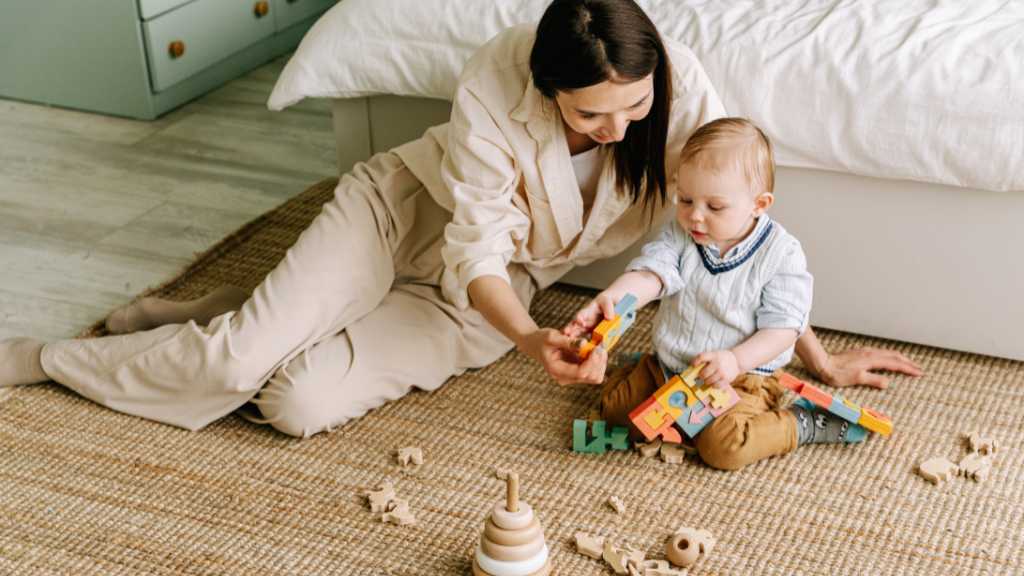
At-home ABA therapy for toddlers can also help caregivers share what is hard outside the session. Maybe mornings are overwhelming before driving into traffic. Maybe bedtime feels impossible after daycare. Maybe mealtimes are stressful because the child refuses most foods. These real-life details help the BCBA design meaningful goals rather than generic ones.
When therapy connects to everyday family life, skills are more likely to carry over beyond the session.
Choosing ABA Therapy for Toddlers in Atlanta, Alpharetta, Buckhead, and Marietta
Finding the right care team can feel overwhelming, especially when you are comparing providers, waitlists, insurance questions, and therapy models. As you explore ABA therapy for toddlers in Georgia, it may help to ask:
- Who will assess my child and create the treatment plan?
- How often will a BCBA supervise care?
- How are goals selected and updated?
- How will therapy support communication?
- Is parent training included?
- Can therapy happen at home, in a center, or both?
- How will progress be measured, and how will it be explained to our family?
- How does the team make sessions appropriate for toddlers?
If you are considering at-home ABA therapy for toddlers, ask how the provider incorporates family routines, caregiver coaching, and generalization. Generalization means helping a child use a skill in more than one setting, with more than one person, and during more than one activity.
For Georgia families, that may mean a child practices communication during therapy, then uses that same skill with a parent in the kitchen, with a sibling in the living room, or during a community outing in Marietta, Buckhead, Alpharetta, or Atlanta.
What Progress Can Look Like Over Time
Progress in ABA therapy for toddlers often builds on small wins. These wins may not always look dramatic at first, but they can change daily life in meaningful ways.
Progress may look like:
- A toddler pointing instead of crying
- A child tolerating a short wait
- A parent understanding what their child wants sooner
- A child using a picture to request a snack
- A smoother transition from playtime to bath time
- A toddler looking toward a caregiver during a shared activity
- A child trying a new sound, gesture, or word
- A family feeling more prepared during difficult routines
When families ask, “What is ABA therapy for toddlers?” the deeper answer is this: it is a structured yet flexible way to help young children practice the building blocks of communication, learning, and independence. The goal is not perfection. The goal is progress that matters in your child’s life.
Helping Your Toddler Take the Next Step in Georgia
Starting ABA therapy for toddlers can bring up many emotions. You may feel hopeful, nervous, unsure, or even overwhelmed by the number of decisions ahead. That is understandable. Your child is young, and you want to make the right choice.
ABA Centers of Georgia supports families with individualized autism care designed around each child’s needs, strengths, and developmental stage. Whether you are exploring services in Atlanta, Alpharetta, Buckhead, Marietta, or nearby areas, our team can help you understand your options, including at-home ABA therapy for toddlers.
To learn more or schedule a consultation, contact ABA Centers of Georgia at (855) 929-5058.