Table of Contents
It often starts quietly.
Maybe your toddler doesn’t look up when you say their name. Maybe they’re not pointing at things they want, or they seem more interested in objects than people. Or maybe nothing specific stands out, and you just have a feeling that something isn’t quite lining up.
If you’re searching for signs of autism in toddlers, you’re not alone. Many parents begin to worry about autism in early childhood, when communication and social skills are rapidly developing.
Here’s the most important thing to know upfront: Not every difference or developmental issue means autism.
Do you want to know why? Keep reading this guide by ABA Centers of Georgia as we explore the difference between typical variation, developmental issues in toddlers, and possible early signs of autism, which can help you make informed, confident decisions without unnecessary fear. Let’s dive in!
What Are the Early Signs of Autism in Toddlers?
When it comes to signs of autism in toddlers, professionals don’t look at just one behavior; they look at patterns across communication, interaction, and behavior.
According to the CDC Developmental Milestones some early indicators may include:
- Limited or inconsistent eye contact
- Not responding to their name consistently
- Delayed speech or loss of previously used words
- Limited use of gestures like pointing or waving
- Reduced interest in sharing experiences (like showing you a toy)
- Repetitive movements (rocking, hand flapping)
- Strong preference for routines or difficulty with change
When talking about autism in early childhood, these patterns often appear together rather than in isolation.
At the same time, many developmental issues in toddlers—like speech delays or sensory sensitivities—can show up without being related to autism. That’s why context matters.
Can Autism Be Diagnosed in Toddlers?
Yes, autism can often be reliably diagnosed during the toddler years.
Research shows that autism in early childhood can sometimes be identified as early as 18–24 months, especially when multiple signs of autism in toddlers are present over time.
A formal evaluation typically includes:
- Developmental history review
- Observation of social communication
- Standardized assessment tools
For a proper diagnosis, specialists assess how your child communicates, connects, and responds in different situations.
Research also highlights that early diagnosis enables children to access support during a critical stage of brain development, helping them overcome developmental challenges and teaching their caregivers to address and advocate for their needs. And that’s really the goal: not labeling but understanding.
How to Tell If There Are Developmental Issues in Toddlers or Autism in Early Childhood?
This is one of the most common (and valid) concerns parents have.
Many developmental issues in toddlers affect a specific area—such as speech—while other areas develop typically. In contrast, autism in early childhood tends to impact multiple areas at once, especially social communication.
Here’s a side-by-side comparison:

Developmental Delay | Autism in Early Childhood |
Delay in one area (e.g., speech) | Differences across multiple areas |
Uses gestures (pointing, waving) | Limited or inconsistent gestures |
Makes eye contact and seeks interaction | Reduced eye contact or social engagement |
Enjoys playing with others | May prefer independent play |
Responds to name consistently | May not respond to name |
Uses facial expressions to communicate | Limited shared emotional expression |
Toddlers experiencing developmental issues may still actively seek connection, even if they struggle with certain skills.
In autism, in early childhood, the difference often lies in how a child connects, not just in what skills they have.
Recent research highlights that early behavioral patterns, especially in social engagement, are key markers for identifying autism in toddlers.
What’s the Difference Between Speech Delay and Autism?
It’s easy to assume that delayed speech automatically points to autism, but that’s not always the case.
Some developmental issues in toddlers involve speech alone, while concrete signs of autism in toddlers typically include broader communication differences.
Speech Delay Only:
- Limited vocabulary
- Uses gestures to communicate
- Makes eye contact
- Shows interest in interaction
Autism in Early Childhood (Communication Differences):
- Delayed speech and reduced gestures
- Limited eye contact
- Less interest in back-and-forth interaction
- Difficulty sharing attention or experiences
In other words, speech delay affects what a child says. Autism affects how a child communicates and connects.
That distinction is key when evaluating signs of autism in toddlers.
Why Early Intervention Matters for Autism in Early Childhood
The toddler years are a powerful window for learning.
During early childhood, the brain is especially adaptable. That means early support for autism in early childhood can make a meaningful difference in how children develop communication, social, and daily living skills.
Early intervention can help individuals on the spectrum:
- Build communication skills (verbal and nonverbal)
- Increase social engagement
- Support emotional understanding
- Develop independence in daily routines
And importantly, it meets children where they are.
Not all developmental issues in toddlers require the same level of support. But when autism is present, early, structured intervention can significantly improve long-term outcomes.
How ABA Therapy Supports Children with Autism
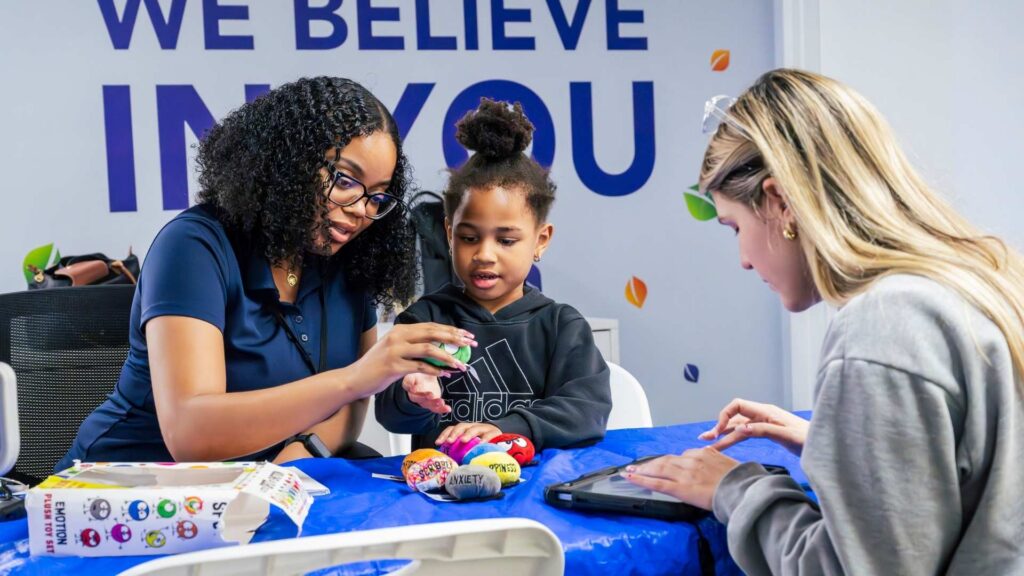
Applied Behavior Analysis (ABA) therapy is a research-based approach widely used to support people with autism.
For children showing signs of autism in toddlers, ABA therapy focuses on:
- Strengthening communication skills
- Encouraging social interaction
- Teaching daily living skills
- Building flexibility and coping strategies
ABA therapy is not about changing who a child is, but helping them build the skills they need to navigate the world with confidence.
Families navigating autism in early childhood often find that structured, individualized support provides clarity, direction, and hope.
What Should You Do If You Notice Signs of Autism in Toddlers?
If some of these behaviors feel familiar, you don’t need to jump to conclusions, but you also don’t have to wait and wonder.
Here are a few practical next steps:
- Observe Patterns Over Time
Look for consistency rather than isolated moments - Track Developmental Milestones
Use trusted tools like the CDC Milestone Tracker - Talk to a Professional
A pediatrician or specialist can guide you - Seek an Evaluation if Recommended
Clarity leads to better support
Recognizing signs of autism in toddlers requires you, as a caregiver, to be informed and proactive.
You Don’t Have to Figure This Out Alone
If you’re navigating questions about autism in early childhood, it’s completely normal to feel uncertain. Many families go through this same process, wondering, researching, and trying to do what’s best for their child.
Understanding signs of autism in toddlers and identifying developmental issues in toddlers early can open the door to the right kind of support at the right time.
At ABA Centers of Georgia, families can:
- Get guidance on developmental concerns
- Explore comprehensive autism evaluations
- Learn about personalized ABA therapy options
If you’re noticing possible signs of autism in toddlers, taking the next step can bring clarity and peace of mind. Schedule a consultation today by clicking here or calling us at (855) 929-5058
Support, answers, and expert guidance are closer than you think.